
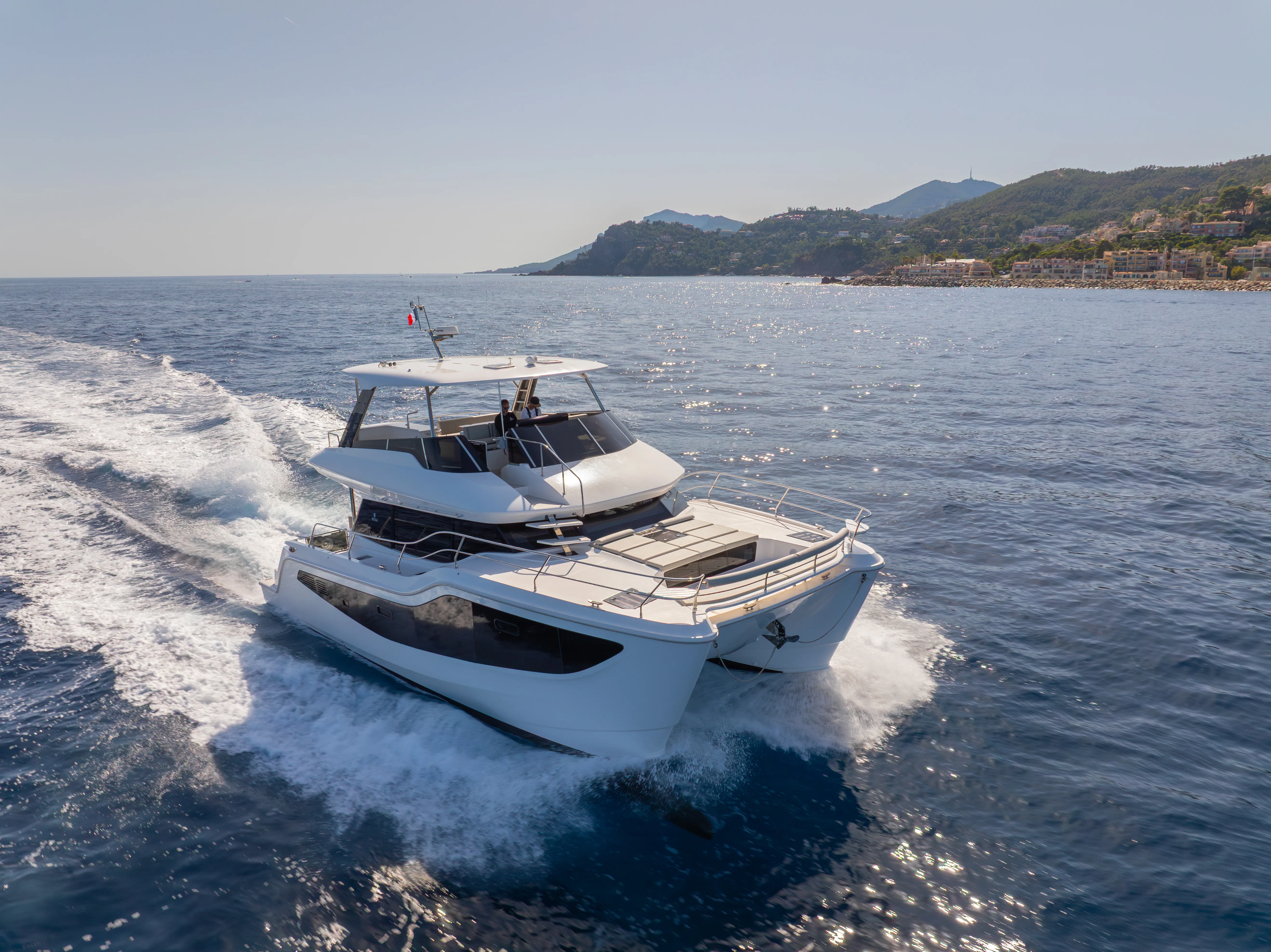
The Aquila 46 Yacht is not a boat that makes its impression through specifications alone. While its 23’3” beam is enough to stand out the moment you step onboard, what truly defines it is not something immediately apparent.
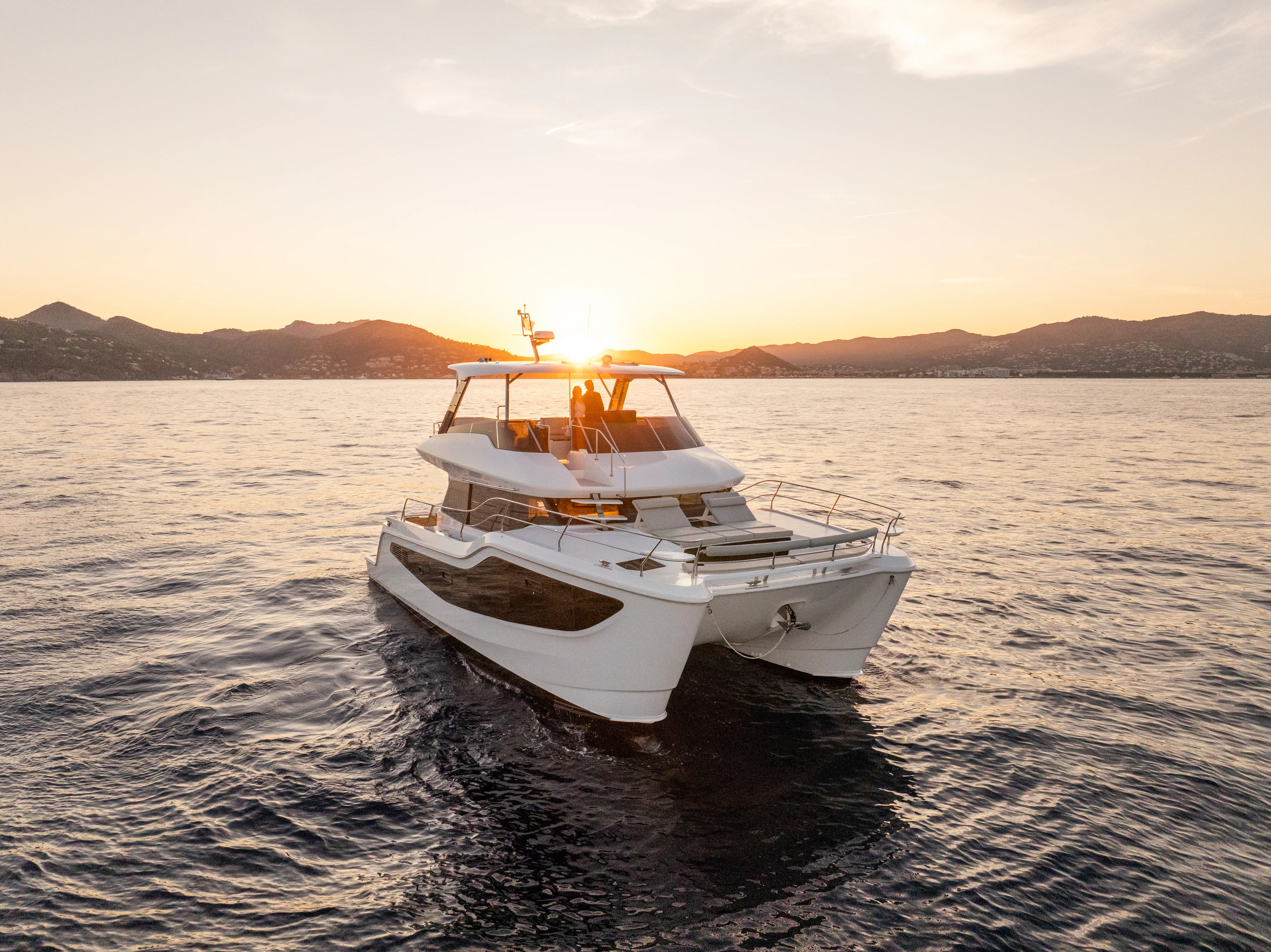
On the Aquila 46 Yacht, boundaries between spaces are deliberately softened. Instead of being clearly divided, areas unfold across the beam, allowing transitions to happen naturally. From interior to aft deck, from social spaces to private quarters, each zone connects with just enough continuity to avoid any sense of interruption during use.
The perception of space, therefore, comes not only from size, but from how it is utilized. Taking full advantage of its twin-hull architecture, the Aquila 46 Yacht expands usable volume across the beam, resulting in a spatial experience comparable to larger monohulls - yet approached differently, with less segmentation and a more fluid sense of use.
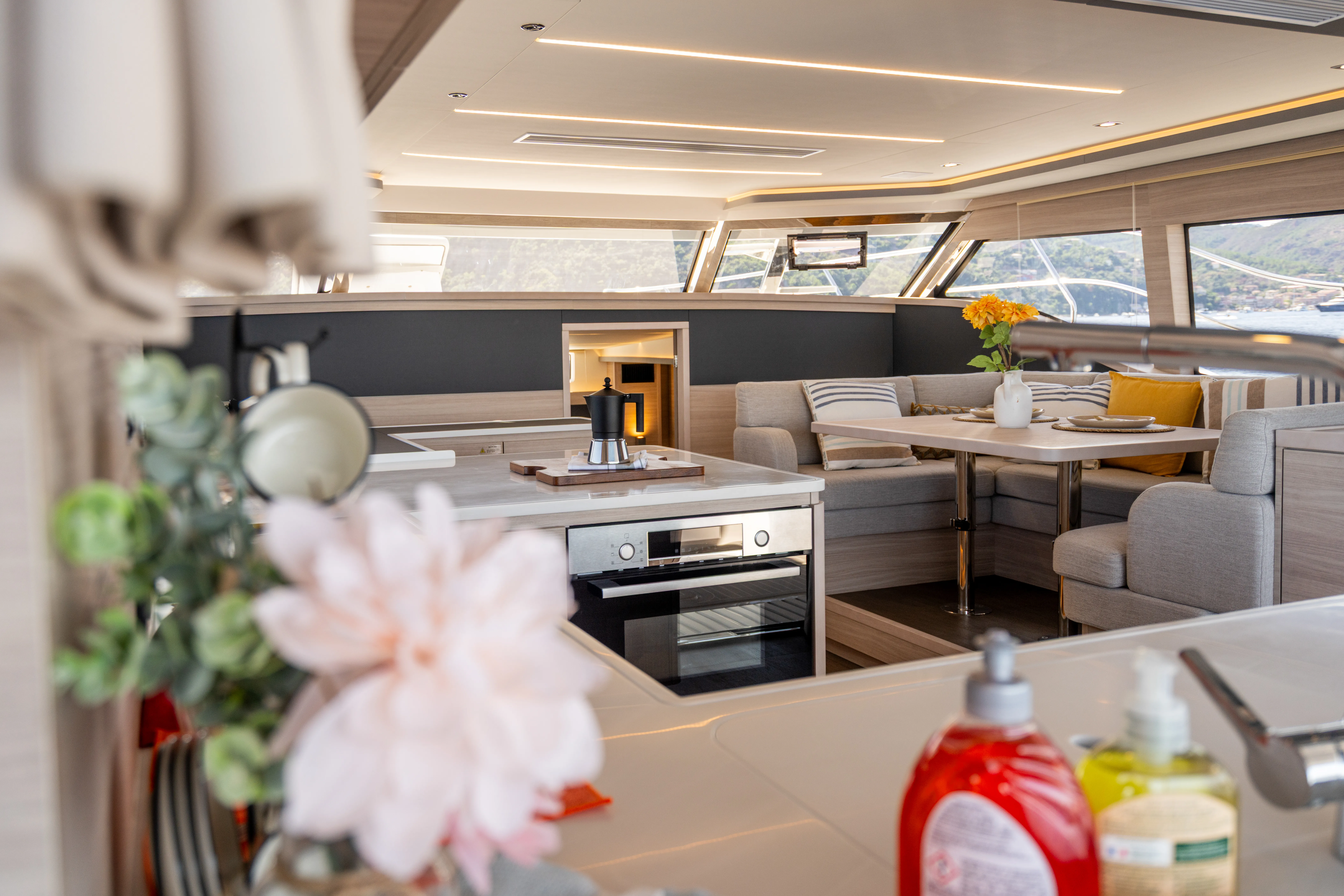
This is most evident in the galley and salon. When the aft window and sliding doors are fully opened, the interior and exterior effectively merge. The transition between inside and outside fades, leaving a single continuous environment where activities unfold naturally, from extended meals to quiet moments throughout the day.
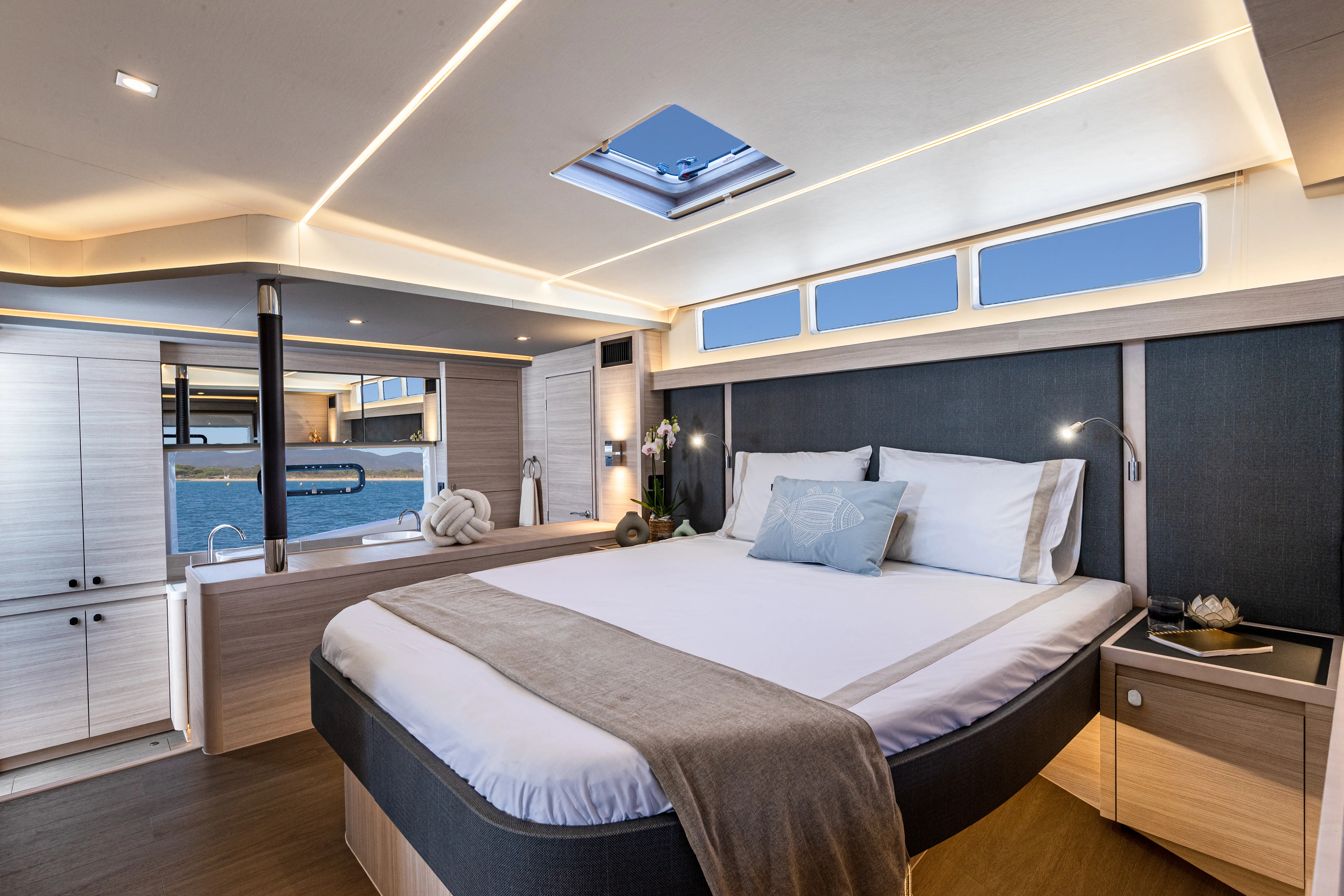
Below deck, the cabins take on a more private character while maintaining a sense of openness. By utilizing the full beam, each cabin accommodates a king-size bed, integrated storage, and an en-suite bathroom, while still benefiting from natural light and outward views.
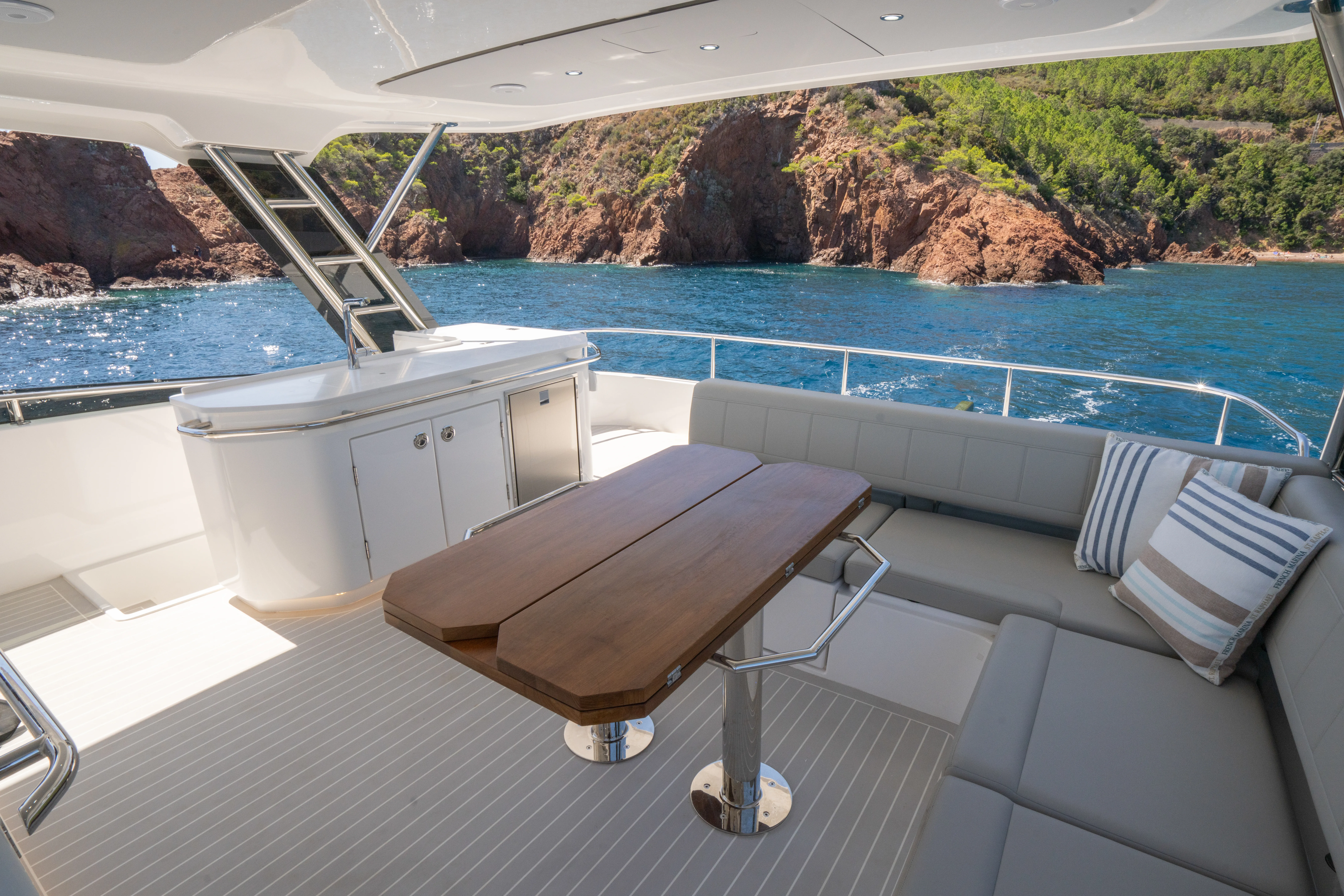
On the flybridge, the layout is handled with greater restraint. The helm position is given expanded visibility, while the remaining space is reserved for social use and connection. Rather than separating these functions, both coexist within a layout flexible enough to support different ways the yacht may be used.
Behind the visible design are technical decisions that are less often discussed, yet fundamental. On the Aquila 46 Yacht, hull construction relies on vinylester resin - an element that is as important as the design itself.
Compared to the more commonly used polyester resin, vinylester offers superior resistance to osmosis, blistering, and impact. This is not an immediately visible difference, but one that directly affects long-term durability and ownership value.
The use of vacuum infusion further enhances structural consistency by eliminating air voids, while the complete absence of wood in structural components reduces the risk of rot and delamination, issues that typically only surface after years of use.
At the same time, the Aquila 46 Yacht is built to CE Category A standards, intended for genuine offshore conditions. Its twin-hull configuration provides inherent stability, reduces pitching motion, and maintains control in more demanding seas, while also improving fuel efficiency compared to monohulls of similar size.
A generous fuel capacity, combined with engine options ranging from Volvo Penta to Yanmar, extends the yacht’s cruising range. The optional Aquila Hydro Glide® system further enhances efficiency and ride comfort at cruising speeds, particularly over longer distances.
The Aquila 46 Yacht, then, is not designed to impress at first glance. Its value lies in how everything comes together over time, operating with a level of continuity that feels natural, and a flexibility that adapts to different ways of being used on the water.